

Have you ever wondered how long eagles live? These majestic birds captivate us with their strength and grace, soaring high above the landscapes we call home.
But behind their powerful wings lies a fascinating story about their lifespan—one that might surprise you. Whether you’re curious about bald eagles, golden eagles, or other species, understanding how long they live reveals much about their survival, habits, and the challenges they face.
Keep reading, and you’ll discover the secrets of eagle longevity, what affects their life expectancy, and why their lifespan matters—not just to nature lovers, but to you as well.

Credit: www.sciencing.com
Eagle Lifespan Basics
Eagles are powerful birds known for their strength and sharp vision. Their lifespan varies based on species and environment. Understanding eagle lifespan basics helps us appreciate these majestic birds better. The lifespan of eagles depends on whether they live in the wild or captivity. Each factor influences their survival and longevity in different ways.
Average Lifespan In The Wild
Most eagles live between 20 and 30 years in the wild. This range depends on food availability and threats like predators. Some eagles face dangers like harsh weather and habitat loss. These challenges can shorten their life significantly. Eagles must hunt and survive daily to reach old age.
Lifespan Differences By Species
Bald eagles often live around 20 to 25 years in the wild. Golden eagles tend to live longer, sometimes up to 30 years. Smaller eagle species usually have shorter lifespans. Each species adapts uniquely to its environment. These adaptations affect their life expectancy.
Lifespan In Captivity
Eagles in captivity often live longer than those in the wild. They receive regular food and medical care. Captive eagles can live over 40 years in some cases. The safe environment reduces risks from predators and harsh weather. Captivity provides a stable life for many eagles.

Credit: birdfact.com
Oldest Eagles On Record
The lifespan of eagles varies widely, but some individuals have lived far longer than the average. These oldest eagles on record show what is possible under ideal conditions. Their stories give insight into eagle longevity and survival.
Many factors affect how long an eagle lives. Understanding these helps explain why some reach great ages while others do not. Below, you will find notable cases and the key factors behind eagle longevity.
Notable Cases And Locations
One of the oldest recorded bald eagles lived over 30 years in the wild. Most eagles usually live between 20 and 25 years. In captivity, they can live longer due to steady food and medical care.
Alaska and parts of Canada have reported some of the oldest wild eagles. These regions offer abundant food and low human disturbance. Golden eagles in Europe have also been known to reach ages above 28 years.
Factors Behind Longevity
Food supply plays a major role in eagle lifespan. Consistent access to fish, small mammals, and carrion supports health and strength. Clean habitats free from pollution also aid longevity.
Protection from human threats, such as hunting and habitat loss, helps eagles live longer. Eagles with safe nesting sites can raise young successfully over many years. Medical care in captivity further extends eagle lives.
Factors Affecting Eagle Lifespan
Eagle lifespan depends on many factors that affect their survival. These birds face risks from nature and humans. Each factor can shorten or extend their lives. Understanding these helps protect and conserve eagles better.
Some factors are natural threats like predators. Others come from the environment or human actions. Each plays a role in how long eagles can live in the wild or captivity.
Natural Predators And Threats
Young eagles face threats from larger birds and animals. Owls, hawks, and other eagles may attack eaglets. Predators like foxes and raccoons can raid nests. Adult eagles are less vulnerable but still face risks.
Diseases and parasites also reduce eagle lifespan. Illness weakens their strength and hunting ability. Injuries from fights or accidents can be fatal.
Environmental Challenges
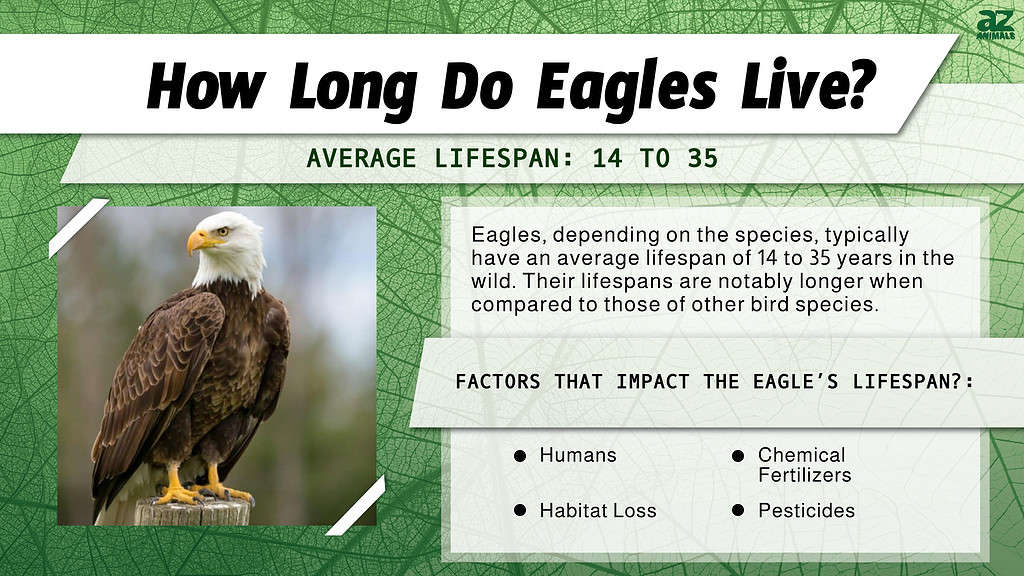
Harsh weather affects eagle survival. Severe storms can destroy nests or cause starvation. Pollution contaminates their food and water sources. Chemicals like pesticides harm their health and reproduction.
Loss of habitat limits hunting and nesting areas. Forest clearing and urban growth reduce safe spaces. This forces eagles into riskier areas with less food.
Human Impact And Conservation
Humans have both negative and positive effects on eagles. Hunting and trapping reduced eagle numbers in the past. Collisions with vehicles and power lines cause deaths today. Illegal poisoning and lead from fishing tackle also harm eagles.
Conservation efforts help eagle populations recover. Protected areas and banning harmful chemicals improve survival. Rescue centers treat injured eagles and release them back. Public awareness raises support for eagle protection.
Credit: a-z-animals.com
Eagle Mating And Lifespan
Eagle mating and lifespan are closely connected in fascinating ways. These birds form strong pair bonds that often last many years. Their breeding habits and nesting routines also play a role in their life cycle. Understanding these factors helps explain how eagles live and thrive in the wild.
Monogamy And Pair Bonds
Eagles usually mate for life. They build deep pair bonds that last through many seasons. This loyalty helps them raise offspring successfully. Staying with one partner reduces stress and increases survival chances. Strong bonds also encourage cooperation in hunting and protecting the nest.
Breeding And Nesting Habits
Eagles build large nests high in trees or cliffs. They often return to the same nest year after year. Both parents share duties like incubating eggs and feeding eaglets. Breeding season varies but generally happens once a year. The care given during this time is intense and requires great energy.
Effect Of Mating On Longevity
Forming stable pair bonds can positively affect eagle lifespan. Cooperation reduces the energy spent on finding new mates. It also lowers risks from fights or stress. Healthy relationships help eagles survive longer and reproduce more successfully. Thus, mating habits link closely to how long eagles live.
Physical Limits And Abilities
Eagles are powerful birds with impressive physical abilities. Their strength and skills define how they live and survive. Understanding their limits helps us know more about their lifespan. These physical traits also affect their hunting success and energy use.
Weight Carrying Capacity
Eagles can carry prey almost as heavy as themselves. Most eagles weigh between 6 to 14 pounds. They usually lift prey weighing up to half their body weight. Carrying heavier loads is difficult due to wing strength and balance. This limit helps protect them from injury during flight.
Flight And Energy Use
Eagles have large wingspans, often over 6 feet. Their wings are built for soaring and gliding with little effort. Soaring saves energy during long flights. Eagles flap their wings when needed to gain speed or lift. Efficient flight helps eagles conserve energy for hunting and survival.
Hunting And Survival Skills
Eagles have sharp eyes to spot prey from far away. They dive at high speeds to catch fish and small animals. Their strong talons grip and kill prey quickly. Eagles adapt their hunting techniques to different environments. These skills increase their chances of survival in the wild.
Surprising Eagle Facts
Eagles are more than just majestic birds of prey. Their behavior and abilities often surprise many. These creatures show strength, skill, and sometimes unexpected traits.
Understanding these facts helps us appreciate their role in nature. Here are some surprising details about eagles that few people know.
Eagles Attacking Small Animals
Eagles usually hunt fish, rabbits, or other medium-sized animals. Yet, they sometimes attack small animals like cats or small dogs. These attacks happen mostly when eagles are young or very hungry. They do not carry off large prey because their wings cannot support much extra weight.
Small pets can be at risk in areas with many eagles. It is wise to watch pets outside and avoid leaving them alone in eagle habitats.
Myths About Eagle Strength
Many believe eagles can lift anything they catch. The truth is different. Eagles can only carry about half their body weight. Their wings are strong but limited by aerodynamics and energy needs.
They use their strength mainly to catch prey and defend their nests. Claims of eagles lifting large animals are exaggerated or false.
Behavior During Hunger And Desperation
When food is scarce, eagles may act more aggressively. Starving eagles can attack unusual prey or scavenge more than normal. Young eagles are especially desperate and take bigger risks.
Adult eagles prefer fish and carrion but will defend their territory fiercely. Hunger changes their behavior and sometimes leads to rare attacks on pets or humans.
Frequently Asked Questions
Can An Eagle Pick Up A 20 Lb Dog?
Eagles cannot lift a 20 lb dog due to weight and aerodynamic limits. They typically carry prey under 10 lbs.
How Old Is The Oldest Eagle?
The oldest recorded eagle lived about 38 years in captivity. Wild eagles typically live 20 to 30 years.
Can Eagles Live For 100 Years?
Eagles do not live for 100 years. Their typical lifespan ranges from 20 to 30 years in the wild. Some eagles live longer in captivity but rarely exceed 50 years. A 100-year lifespan for eagles is not scientifically supported.
Do Eagles Have One Mate For Life?
Eagles usually form strong pair bonds and often mate for life. They reunite each breeding season to raise their young together.
Conclusion
Eagles live many years in the wild, often reaching 20 to 30. Some eagles live longer in protected areas or captivity. Their lifespan depends on food, environment, and safety from predators. Understanding eagle life helps us appreciate these strong birds.
Watching eagles soar reminds us of nature’s power and beauty. Each eagle’s journey is unique and inspiring.