

Have you ever wondered what wrens eat and how you can attract these lively little birds to your backyard? Understanding their diet is the key to inviting wrens to visit and even stay around your home.
Wrens are mostly insect eaters, but they also enjoy some seeds and nuts. If you want to see these energetic birds fluttering through your garden, knowing exactly what to offer them will make all the difference. Keep reading to discover the best foods for wrens, how to feed them right, and simple tips to make your yard a wrens’ favorite spot.
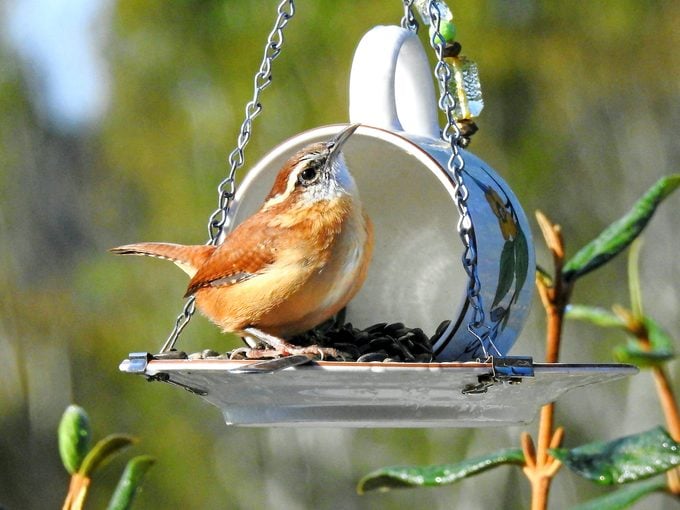
Credit: www.birdsandblooms.com
Wren Diet Basics
Wrens have a simple diet that keeps them active and healthy. They mostly eat small insects and other tiny creatures. Their eating habits help control insect populations in gardens and forests.
Wrens do eat some seeds and nuts, but these are not their main food. Understanding what wrens eat helps attract them to your yard. It also supports their natural behavior and survival.
Primary Insectivores
Wrens mainly eat insects. They hunt for beetles, caterpillars, spiders, and grasshoppers. These insects provide the protein and nutrients wrens need.
They catch insects on leaves, bark, and the ground. Wrens use their sharp beaks to pick insects from tight spaces. This diet helps wrens stay energetic and fit.
Seed And Nut Consumption
Wrens sometimes eat seeds and nuts, but only in small amounts. They like sunflower seeds and peanuts the most. These foods add variety to their diet.
Offering peanuts and sunflower seeds can attract wrens to feeders. They prefer seeds that are easy to eat and high in energy. Seeds alone do not keep wrens healthy for long.

Credit: coleswildbird.com
Favorite Foods Of Wrens
Wrens have distinct food preferences that fuel their energetic lifestyles. Their diet mainly consists of high-protein items that support their constant activity. Understanding what wrens enjoy most helps in attracting them to your garden or backyard feeder. They favor a mix of live insects and nutrient-rich seeds and nuts.
Mealworms: Live And Dried
Mealworms rank high on a wren’s favorite food list. Live mealworms are especially appealing because they mimic the wren’s natural prey. Dried mealworms are a good alternative when live ones are unavailable. Both forms provide essential protein and fat.
Suet Varieties
Suet offers wrens a rich energy source during colder months. Suet cakes with added insects or mealworms attract wrens quickly. Plain suet is less popular but still eaten, especially in winter. Suet feeders placed in shaded areas work best.
Peanuts And Peanut Hearts
Peanuts are a favorite treat for wrens, especially shelled peanuts. Peanut hearts are easier for wrens to eat and digest. These nuts provide fats and proteins, supporting their active metabolism. Always offer unsalted, fresh peanuts for best results.
Sunflower Seeds
Black oil sunflower seeds are the most preferred by wrens. These seeds are small and easy for wrens to handle. They provide good energy and fats. Sunflower seeds can be offered in platform feeders or scattered on the ground.
Common Insects
Wrens naturally eat many insects like beetles, caterpillars, and spiders. Grasshoppers and crickets also make up part of their diet. These insects supply necessary proteins and nutrients. Encouraging native plants increases insect availability for wrens.
Feeding Wrens At Home
Feeding wrens at home invites these lively birds into your garden. They are small, active birds that prefer insects but also enjoy some seeds and nuts. Creating a welcoming feeding spot helps support their natural diet. Wrens thrive on protein-rich foods, so offering the right treats is key.
Best Feeder Types
Platform feeders work well for wrens. They provide space for mealworms, peanuts, and suet. Suet feeders with insect bits attract wrens too. Avoid tube feeders since wrens rarely use them. Low, open feeders suit their ground-feeding habits best.
Ground Feeding Tips
Scattering food on the ground is perfect for wrens. Mealworms and sunflower hearts are favorites. Keep the feeding area clean to avoid pests. Place food near shrubs or low bushes for safety. Wrens feel secure feeding close to cover.
Using Native Plants
Native plants boost insect populations wrens love to eat. Plants like goldenrod and milkweed attract caterpillars and spiders. Shrubs with dense leaves offer shelter and hunting spots. Adding native plants creates a natural wren habitat. This supports their diet and daily needs.
Seasonal Diet Changes
Wrens adjust their diet as the seasons change. Their food choices depend on what is available. This helps them survive all year.
In warmer months, wrens eat mostly insects. In colder months, they rely on seeds and stored food.
Summer Insect Abundance
Summer brings many insects. Wrens eat beetles, caterpillars, spiders, and grasshoppers. These insects give wrens the protein they need.
Wrens hunt actively in bushes and on the ground. They find insects hiding under leaves and bark. This diet helps wrens build strength for nesting and raising chicks.
Winter Feeding Needs
Winter insects become scarce. Wrens switch to eating seeds and nuts. They also eat suet and mealworms if available.
Wrens visit feeders more in cold months. Offering high-energy foods helps them stay warm. Seeds like sunflower and peanuts provide fat and energy for winter survival.
Wrens In Urban Areas
Wrens are small, lively birds that have successfully made urban areas their home. These birds adapt well to cities and towns, finding food and shelter amid busy human environments. Their ability to adjust their diet helps them thrive where natural insect populations may be lower. Understanding what wrens eat in urban areas can help people support these birds in their backyards.
Adapting Diet To Environment
Wrens mainly eat insects like beetles, caterpillars, and spiders. In cities, they also eat small seeds and nuts when insects are scarce. Mealworms, either live or dried, are a favorite source of protein. Wrens take advantage of food found near homes, such as suet or peanut pieces. This flexible diet helps them survive in urban settings with less natural food available.
Attracting Wrens In Backyards
Providing the right food attracts wrens to your yard. Offer suet cakes with insects or nuts on a suet feeder. Scatter dried mealworms or sunflower seeds on a platform feeder or ground. Plant native shrubs and flowers to support insect populations naturally. Creating a safe, quiet area with dense cover will encourage wrens to visit and stay.
Foods To Avoid For Wrens
Knowing what foods to avoid is as important as offering the right diet for wrens. Some foods can harm them or attract unwanted pests. Avoid feeding wrens anything that might upset their digestive system or lower their energy. Protect these small birds by understanding which items do more harm than good.
Processed Human Foods
Wrens should never eat processed foods like bread, chips, or sweets. These contain salt and additives harmful to birds. Such foods provide no real nutrition and can cause illness. Stick to natural, bird-safe options only.
Milky Or Dairy Products
Dairy products like milk, cheese, or yogurt can upset a wren’s stomach. Birds lack the enzymes to digest lactose properly. Feeding dairy may lead to digestive problems and weakness. Keep these foods away from all wild birds.
Toxic Plants And Seeds
Certain plants and seeds are poisonous to wrens. Avoid offering avocado, rhubarb, or tomato leaves. These can cause serious health issues or death. Always research before placing new foods near feeding areas.
Salty Or Sugary Foods
Foods high in salt or sugar stress a wren’s body. Salt can cause dehydration and kidney damage. Sugar may disrupt their natural energy balance. Offer fresh water instead to keep them healthy and hydrated.
Large Or Hard Seeds
Wrens prefer small seeds like sunflower or peanuts in small pieces. Large or very hard seeds are difficult to eat and may choke them. Providing properly sized food helps avoid feeding accidents and keeps them safe.
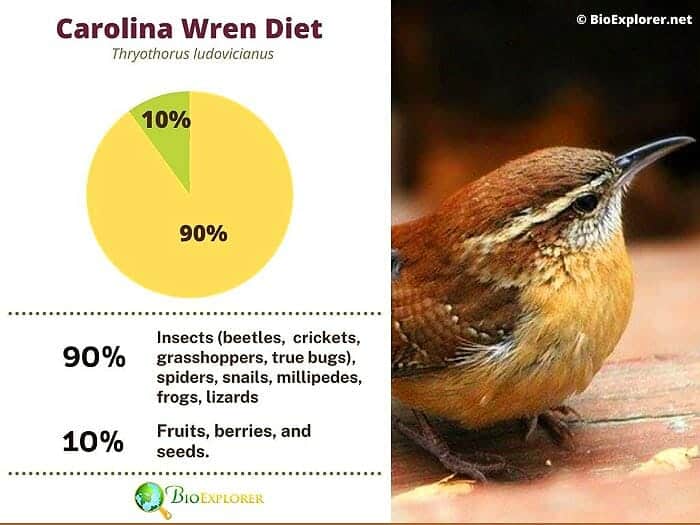
Credit: www.bioexplorer.net
Frequently Asked Questions
Do Wrens Eat Bird Seed?
Wrens mainly eat insects but will consume some seeds like sunflower seeds and peanuts. They prefer protein-rich foods such as mealworms and suet. Offering live or dried mealworms, suet cakes, and peanuts attracts wrens better than standard birdseed mixes.
Are Wrens Good Birds To Have In Your Yard?
Wrens are excellent yard birds. They control insects, are active, and bring lively sounds. Feed them mealworms, suet, and peanuts to attract them.
What Food To Put Out For Wrens?
Feed wrens live or dried mealworms, suet with insects, peanut pieces, sunflower hearts, and occasional berries. They prefer protein-rich foods.
How Do You Attract Wrens To A Wren House?
Place a wren house in a quiet, sheltered spot 5-10 feet high. Offer mealworms, suet, and native plants nearby. Keep the area safe from predators and avoid using pesticides to encourage insects.
Conclusion
Wrens mainly eat insects, spiders, and small bugs for protein. They also enjoy some seeds like sunflower and peanuts. Offering mealworms and suet helps attract them to your yard. Providing native plants encourages natural food sources nearby. Feeding wrens supports their energy needs and keeps them healthy.
Watching these lively birds can brighten any outdoor space. Simple food choices make a big difference for wrens. Try these tips to welcome wrens to your garden today.