

Have you ever watched a sparrow hopping around your backyard and wondered, “What do sparrows eat?” These tiny birds may seem simple, but their diet is surprisingly varied and interesting. Knowing what sparrows eat can help you attract them to your garden, care for baby sparrows, or simply appreciate their natural habits more deeply.
You’ll discover exactly what fuels these lively little birds—from the seeds they love to the insects that give them a protein boost. Ready to learn how you can become a sparrow’s favorite neighborhood spot? Let’s dive into the tasty world of sparrow snacks!

Credit: www.youtube.com
Sparrow Diet Basics
Sparrows have a simple diet that helps them survive in many places. They eat a variety of foods depending on the season and what is available. Understanding what sparrows eat helps in attracting and feeding them properly. Their diet mainly includes seeds, insects, and some fruits. Each type of food gives sparrows the energy and nutrients they need.
Common Foods Sparrows Eat
Sparrows mostly eat seeds and small insects. They also enjoy bits of fruit and occasional scraps of human food. Seeds form the main part of their diet. Insects provide essential protein, especially for young sparrows. Fruits add vitamins and moisture to their meals. Sparrows adapt their diet based on what is near them and the time of year.
Seeds Sparrows Prefer
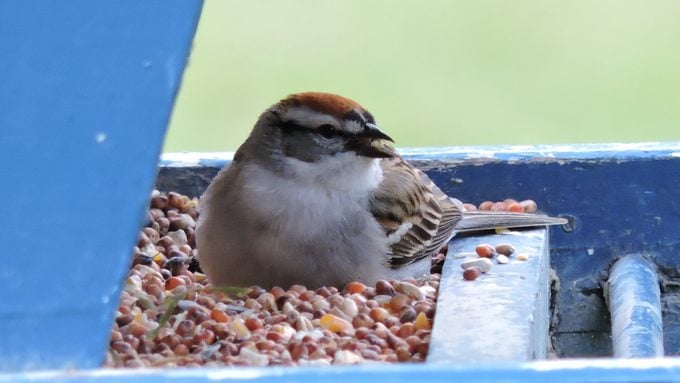
Sparrows like small seeds that are easy to eat. White millet is a favorite for many sparrows. Black oil sunflower seeds are also popular because they are high in fat. Other seeds sparrows enjoy include safflower, cracked corn, and nyjer (thistle). These seeds provide energy and help sparrows stay healthy.
Insects In Sparrow Diet
Insects are a vital part of a sparrow’s diet, especially in spring and summer. They eat mealworms, ants, caterpillars, and small bugs. Insects offer protein that is important for growth and feather development. Baby sparrows need more insects than adults for proper nutrition. Insects also help sparrows stay strong during breeding season.
Fruits And Other Foods
Sparrows sometimes eat fruits like berries, grapes, and small pieces of apple. These fruits provide vitamins and water. Sparrows also eat suet, birdseed cakes, and bits of hard-boiled egg. These foods offer extra energy and nutrients. Feeding sparrows a mix of seeds, insects, and fruits supports their health and natural diet.
Credit: www.birdsandblooms.com
Adult Sparrow Feeding Habits
Adult sparrows have a diverse diet that supports their active lifestyle. They eat a variety of foods to meet their energy needs. Their feeding habits change slightly with the seasons but mainly focus on seeds and insects. Understanding what adult sparrows eat helps in providing the right food if you want to attract them to your garden.
Seed Types For Adults
Adult sparrows enjoy many seed types. Common favorites include white millet and black oil sunflower seeds. Sunflower hearts or chips are also popular. Safflower and cracked corn provide extra variety. Nyjer, also called thistle seed, is a small seed they like. These seeds offer good nutrition and energy.
Insect Choices For Adults
Insects are a vital part of an adult sparrow’s diet. They often eat mealworms and dried insects. Small ants and caterpillars provide important protein. Insects help sparrows stay strong, especially during breeding seasons. They usually find insects on plants or the ground.
Fruit And Supplemental Foods
Sparrows eat fruits like berries, grapes, and chopped apples. These fruits add vitamins and moisture. They also enjoy suet and birdseed cakes for extra calories. Bits of hard-boiled egg give them protein. These foods support their health, especially in cold weather.
Feeding Locations And Methods
Adult sparrows prefer feeding on the ground or low platforms. Scatter seeds on the ground near bushes or shrubs for cover. Platform or tray feeders work well too. Feeding near shelter helps sparrows feel safe. Regular feeding spots attract sparrows back often.
Feeding Baby Sparrows
Feeding baby sparrows is crucial for their growth and survival. These young birds need special care and nutrition. Their diet differs from adult sparrows to meet their rapid development needs. Understanding what baby sparrows eat helps provide the right food to keep them healthy.
Parents feed their chicks mostly insects and protein-rich foods. These provide energy and nutrients for strong muscles and feathers. Knowing safe foods and feeding methods is important for anyone helping baby sparrows.
Protein Needs Of Fledglings
Baby sparrows require high protein to grow quickly. Protein helps build muscles and feathers. Insects like mealworms, ants, and caterpillars are perfect sources. These insects offer essential amino acids for development. Without enough protein, chicks may become weak and underdeveloped.
Safe Foods For Chicks
Offer small, soft insects from pesticide-free places. Mashed hard-boiled eggs provide extra protein and nutrients. Moistened dry dog or cat food without seasoning also works well. Special bird formulas are available to meet nutritional needs. Always choose fresh, clean food to avoid illness.
Foods To Avoid
Avoid feeding baby sparrows seeds or dry food alone. These are hard to digest for chicks. Do not give salty, sugary, or processed human foods. Citrus fruits and milk can harm them. Stay clear of anything toxic or too spicy for birds.
Feeding Techniques For Babies
Feed baby sparrows small amounts frequently. Use tweezers or a soft brush to offer food gently. Mimic how parent birds feed by placing food near their beaks. Keep the feeding area clean to prevent infections. Be patient and calm to avoid stressing the chicks.
Seasonal Changes In Diet
Sparrows change their diet with the seasons. Their food choices depend on what is available. This seasonal shift helps them get the right nutrients all year.
In warmer months, sparrows eat more insects and fresh plants. As cold weather approaches, they switch to seeds and stored foods. These changes keep sparrows healthy and active.
Spring And Summer Foods
During spring and summer, sparrows eat many insects. Caterpillars, ants, and mealworms are common choices. These insects provide protein for growth and energy.
They also eat fresh berries and small fruits in these seasons. Soft plant materials like young shoots and buds add variety. Sparrows need this mix to raise their young successfully.
Fall And Winter Preferences
In fall and winter, insects become scarce. Sparrows rely more on seeds like millet and sunflower. These seeds give them energy to stay warm.
They also eat grains and leftover crops from fields. Hard foods like suet and nuts help sparrows survive cold days. This diet shift is key to their survival.
Attracting Sparrows To Your Yard
Attracting sparrows to your yard brings lively energy and natural beauty. These small birds are easy to welcome with simple steps. Creating a friendly environment helps sparrows visit and stay longer. Offer food, water, and shelter to keep them comfortable. Watch as they enjoy your yard and brighten your days.
Best Food To Offer
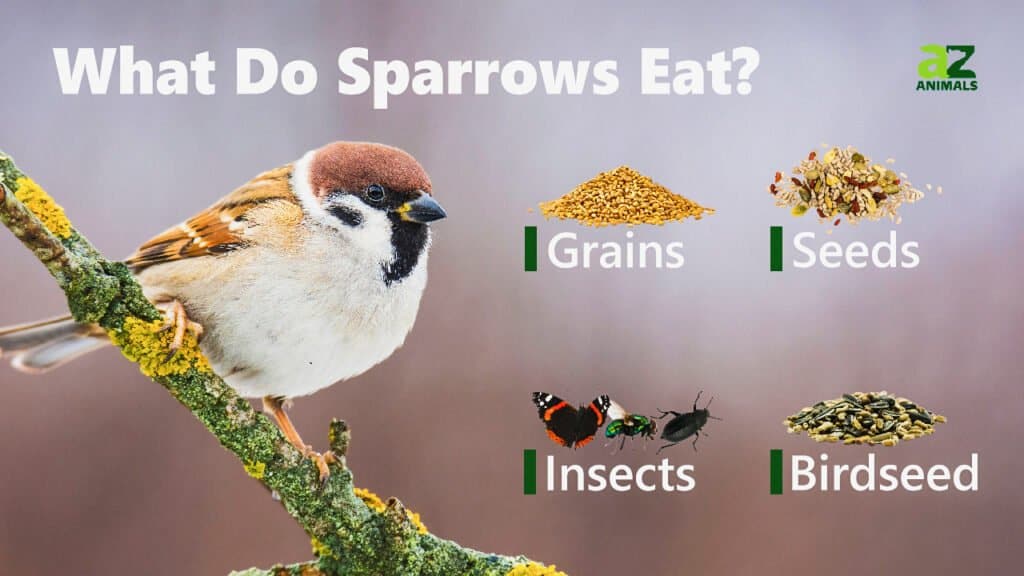
Sparrows prefer a variety of seeds and insects. Offer white millet, black oil sunflower, and safflower seeds. Cracked corn and nyjer (thistle) also attract them. Mealworms and dried insects provide needed protein. Small fruits like chopped berries, grapes, and apple are good too. Suet and birdseed cakes offer extra energy. Scatter seeds on the ground or use platform feeders. Keep food fresh and clean for best results.
Feeder Types And Placement
Platform or tray feeders suit sparrows well. They prefer feeding on flat surfaces near ground level. Avoid tube feeders designed for small perching birds. Place feeders near shrubs or bushes for quick cover. This helps sparrows feel safe from predators. Keep feeders clean to prevent disease. Regularly refill food to encourage daily visits. Position feeders in quiet areas away from heavy foot traffic.
Providing Water And Shelter
Fresh water attracts sparrows for drinking and bathing. Use shallow birdbaths with clean water daily. Add stones or sticks so birds can perch safely. Provide natural shelter with bushes, shrubs, or hedges. Dense foliage offers protection from weather and predators. Nesting boxes can encourage sparrows to raise young nearby. Avoid pesticides to keep insects safe for sparrows. A yard with water and shelter invites sparrows all year.
Credit: a-z-animals.com
Common Feeding Mistakes
Feeding sparrows may seem easy, but many people make common mistakes. These errors can harm the birds or keep them from getting the nutrients they need. Understanding what to avoid and how much to feed is important to keep sparrows healthy and happy.
Harmful Foods To Avoid
Sparrows should never eat salty, sugary, or spicy foods. Bread is a common mistake; it fills their stomach but lacks nutrition. Avoid processed foods like chips or candy. Certain seeds, like apple seeds, are toxic. Also, do not give them raw beans or avocado. These can cause sickness or even death.
Feeding Frequency And Quantity
Overfeeding sparrows leads to obesity and poor health. Offer small amounts several times a day. Do not leave food out for long periods, as it can spoil. During cold months, sparrows need more food. But in warm weather, less is better. Watch their behavior to adjust feeding times and amounts.
Health Risks From Improper Feeding
Improper feeding can cause digestive problems and malnutrition. Spoiled or moldy food may lead to infections. Feeding only one type of seed can cause vitamin deficiencies. Sudden changes in diet stress sparrows and weaken their immune system. Clean feeders often to prevent disease spread among birds.
Frequently Asked Questions
What Can I Feed A Sparrow?
Feed sparrows seeds like millet, sunflower hearts, safflower, and cracked corn. Offer insects, suet, fruits, and softened eggs. Provide fresh water and use ground or platform feeders. Baby sparrows need small live insects and protein-rich soft foods from pesticide-free sources.
What Will Sparrows Not Eat?
Sparrows will not eat bread, salty or sugary foods, and milk. Avoid feeding these to keep them healthy.
Are House Sparrows Good To Have Around?
House sparrows help control insects and add life to gardens. They eat seeds and scraps but may damage crops or compete with native birds. Overall, they offer benefits and minor drawbacks when living nearby.
Should I Feed The Sparrows?
Feeding sparrows with seeds, insects, and fruits supports their health and natural diet. Use clean feeders near cover. Avoid bread, salty, or sugary foods. Provide fresh water daily. Feeding helps sparrows thrive, especially in urban areas with limited natural food.
Conclusion
Sparrows eat a variety of foods like seeds, insects, and fruits. They enjoy seeds such as millet and sunflower hearts. Insects like mealworms provide important protein, especially for baby sparrows. Offering fresh water helps them stay healthy. Feeding sparrows on the ground or in low feeders works best.
Knowing what sparrows eat helps you support these lively birds. Simple, natural foods keep sparrows happy and strong. Watching them feed can be a fun way to connect with nature.