

Have you ever looked up to see a V-shaped flock of geese soaring through the sky and wondered, “When do geese migrate?” Understanding their migration patterns can deepen your appreciation for these incredible travelers and help you know when and where to spot them. Geese don’t just take off randomly—they follow a well-timed journey twice a year, guided by changes in daylight, temperature, and food availability.
Whether you’re a nature lover, a photographer, or simply curious, learning about when geese migrate will connect you to the rhythms of the seasons in a whole new way. Keep reading to discover exactly when geese head south for the winter and when they return north in the spring, plus what influences their timing and destinations.
Your next chance to witness this stunning natural spectacle might be closer than you think!
Migration Timing
Geese migrate twice each year to find better living conditions. Migration timing varies by season and location. Understanding when geese move helps us appreciate their natural rhythm.
Migration depends on weather, food, and daylight changes. These factors trigger geese to fly south or north.
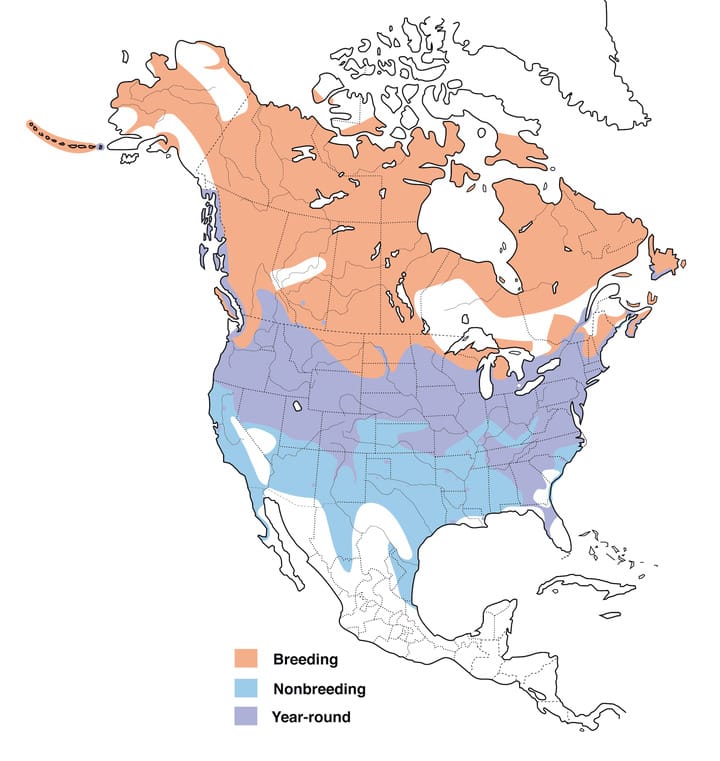
Fall migration usually starts in late September and lasts through November. Some geese begin as early as August. They fly south to escape cold and frozen waters. Geese leave northern areas like Canada and head to warmer U.S. and southern states. This move helps them find food and survive winter.
Spring migration happens from late February to May. Geese fly north to return to breeding grounds. Warmer weather and longer daylight signal the time to go back. This journey allows them to raise their young in safe, rich environments.
Factors Affecting Timing
Daylight and temperature are key triggers. Short days and cold weather push geese south. Warmer temperatures and longer days bring them north.
Food availability influences timing too. Geese stay where food is easy to find. Waste grains and open water attract them.
Some geese, like many Canada geese, no longer migrate. They live in one area all year if conditions stay good.
Credit: www.allaboutbirds.org
Fall Migration
Fall migration marks a critical time for geese as they prepare to leave colder northern regions. This journey southward helps them survive winter by finding warmer areas with better food. During this period, many geese gather in large flocks and fly long distances.
The fall migration is a natural cycle that happens every year. It usually begins when daylight decreases and temperatures drop. Geese rely on instinct and environmental cues to know when to start their trip.
Schedule And Duration
Geese start migrating south from late September to November. Some begin as early as August, especially in colder areas. The journey can last several weeks, depending on weather and food availability. They travel in stages, stopping at resting spots along the way.
Reasons For Southward Movement
Cold weather drives geese to move south. Northern lakes and ponds freeze, making food hard to find. Geese need open water and abundant food to survive. Moving south keeps them safe and well-fed during winter months.
Common Destinations
Many geese fly from Canada and northern U.S. states to southern U.S. regions. Popular destinations include the Gulf Coast, southern plains, and parts of the eastern U.S. These areas offer milder temperatures and plenty of food. Some geese even reach Mexico or the Caribbean.
Spring Migration
Spring migration marks a crucial time for geese as they journey back north. This migration happens after winter when temperatures rise and days grow longer. Geese leave their southern winter homes and travel to areas where they will breed and raise their young. This journey involves many factors that influence the timing and route of their flight.
Schedule And Duration
Spring migration usually begins in late February and lasts until May. The exact timing depends on weather and food availability. Some geese start moving north as early as February, while others wait until spring is well underway. The migration can last several weeks, with stops along the way to rest and feed.
Reasons For Northward Movement
Geese move north to find better conditions for raising their young. Warmer weather means more food and safer nesting sites. Longer daylight hours help geese find food and care for their goslings. Moving north also reduces the risk of predators compared to wintering grounds.
Breeding Grounds
Breeding grounds are usually in northern regions like Canada and the northern United States. These areas offer abundant food and safe nesting areas near water. Geese return to the same breeding grounds each year. The choice of site ensures the best chance for gosling survival and growth.
Credit: varmentguard.com
Factors Affecting Migration
Geese migration depends on many factors that influence their timing and routes. These factors help geese decide when to leave and where to go. Understanding these helps us know more about their behavior and survival.
Daylight And Temperature
Shorter days signal that fall is coming. Geese sense less daylight and prepare to fly south. Cooler temperatures also tell them food will soon be scarce. When spring arrives, longer days and warmer air encourage geese to return north. These natural cues help geese time their migration well.
Food Availability
Geese need plenty of food to fuel their long flights. They look for areas with enough grains, grasses, and aquatic plants. If food is scarce, they leave earlier or travel farther. Fields with leftover crops attract geese during fall. In spring, new plant growth helps them regain strength for breeding.
Resident Geese Behavior
Some geese no longer migrate and stay in one place year-round. These resident geese find food and shelter nearby. They adapt to milder winters in cities or farms. Their behavior changes migration patterns and reduces the number of geese flying south. This shift affects local ecosystems and geese populations.
Wintering Locations
Geese choose specific places to spend the winter months. These wintering locations offer milder weather and enough food. Understanding where geese go helps bird watchers and nature lovers enjoy their migration.
Southern United States
Many geese fly to the southern United States for winter. States like Texas, Louisiana, and Florida attract large flocks. These areas have warmer temperatures and open water, which geese need. Fields and wetlands provide plenty of food for feeding.
Mexico
Some geese continue further south into Mexico. The coastal regions and valleys offer good shelter from cold weather. They find food in farmlands and natural lakes. Mexico’s mild winter climate helps geese survive until spring.
Urban And Year-round Habitats
Not all geese migrate long distances. Many live in cities and towns all year. Parks, golf courses, and ponds give them food and safety. These urban areas have fewer predators and milder winters. Some geese have adapted well to these human habitats.
Migration Routes
Geese travel thousands of miles during migration to reach warmer places. They follow specific paths called flyways. These routes help them avoid bad weather and find food. Understanding these routes shows how geese survive the changing seasons.
Mississippi Flyway
The Mississippi Flyway is a major north-south route. It runs along the Mississippi River. Many geese use this path from Canada to the Gulf of Mexico. This flyway offers plenty of wetlands and food stops. It is one of the busiest migration routes in North America.
Atlantic Flyway
The Atlantic Flyway follows the East Coast of the United States. Geese travel from northern breeding grounds to southern states and even the Caribbean. Coastal marshes and bays provide resting spots along the way. This route helps birds avoid harsh inland weather.
Pacific Flyway
The Pacific Flyway runs along the West Coast. It stretches from Alaska to California and Mexico. Geese find food in estuaries and fields near the coast. This flyway is less crowded but just as important for migration. It offers a milder climate during winter months.
Geese Species Migration
Geese species migrate to survive harsh weather and find food. Different species have unique migration habits. Their journeys depend on climate, geography, and food supply.
Migration helps geese reach safe breeding and wintering areas. These patterns vary widely among species. Understanding these routes reveals nature’s amazing rhythm.
Canada Geese Patterns
Canada geese migrate mainly between northern breeding grounds and southern wintering sites. They leave in late September through November. Some start migrating as early as August. These geese fly south to avoid frozen lakes and find open water.
In spring, they return north from late February to May. Migration timing depends on temperature and food availability. Some Canada geese live year-round in mild areas. These resident geese do not migrate.
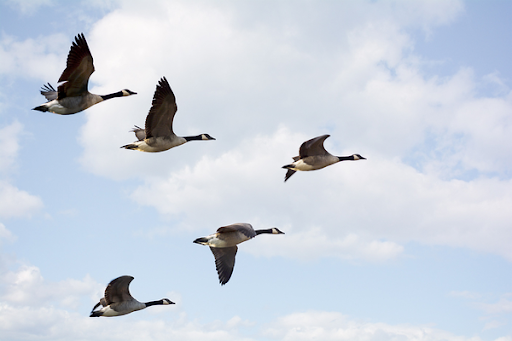
Canada geese often travel in large V-shaped flocks. This formation helps save energy during long flights. Their routes cover Canada, the United States, and sometimes northern Mexico.
Snow Geese Patterns
Snow geese breed in the Arctic tundra. They migrate south to warmer regions in fall. Migration usually starts in September and continues through November. Snow geese travel to southern U.S. and Mexico for winter.
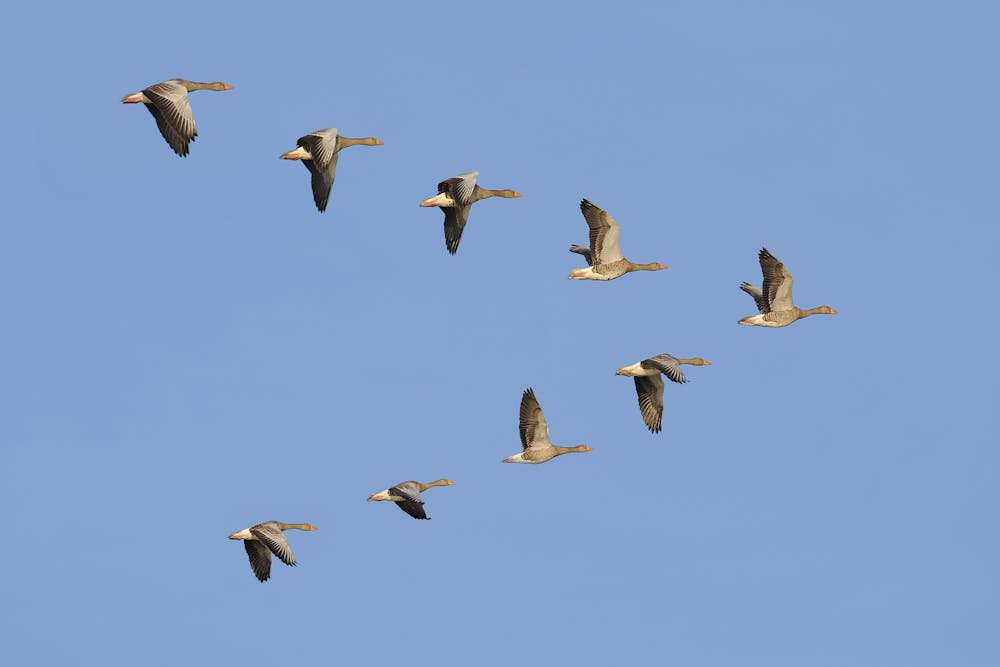
They return north in early spring to breed and raise young. Snow geese fly in large groups that can number in thousands. Their migration routes follow coastlines and river valleys.
Snow geese depend on open fields and wetlands for feeding. They feed on leftover crops during migration. These birds face challenges like weather and predators along their journey.
Credit: theconversation.com
Behavioral Adaptations
Geese have unique behavioral adaptations that help them survive long migrations. These behaviors guide their timing, flight patterns, and routes. Understanding these adaptations shows how geese manage to travel thousands of miles safely.
How Geese Know When To Migrate
Geese use natural cues to decide when to migrate. Changes in daylight length and temperature signal the time to leave. Shorter days and cooler weather in fall prompt southward travel. In spring, longer days and warmer weather trigger their return north. Geese also sense food availability, leaving when food becomes scarce.
Flying In Formation
Geese fly in a V-shaped formation during migration. This formation reduces air resistance and saves energy. Each bird takes turns leading, sharing the hard work. The formation also helps them communicate and stay together. It improves navigation and keeps the flock safe from predators.
Variations In Migration
Not all geese migrate the same way. Some migrate long distances, while others stay year-round. Migration routes and timing vary by species and location. Weather and food availability cause changes in migration patterns. These variations help geese adapt to different environments and survive harsh conditions.
Frequently Asked Questions
What Month Do Geese Migrate?
Geese migrate south from September to November to escape cold. They return north between late February and May to breed. Migration timing depends on location, weather, and food availability. Some geese remain year-round in milder areas.
Where Do Geese Go In The Winter In The Usa?
Geese migrate south in winter to warmer U. S. regions and Mexico, using flyways like the Mississippi and Atlantic. They stop at wetlands and fields for food. Some stay year-round in urban areas with open water. Species-specific destinations vary, such as Snow Geese heading to the Gulf Coast or California.
Where Do Geese Go Over Winter?
Geese migrate south in fall to warmer U. S. regions and Mexico. They stop at wetlands and fields for food and rest. Some stay year-round in urban areas with open water. Migration routes vary by species and location.
What Triggers Geese Migration?
Geese migration triggers include shorter daylight, colder temperatures, and reduced food availability. These cues prompt geese to move between breeding and wintering grounds.
Conclusion
Geese migrate twice each year to find food and warmer weather. In fall, they fly south to escape cold and frozen waters. In spring, they return north to breed when days get longer and warmer. Migration timing depends on daylight, temperature, and food availability.
Some geese stay in one place year-round if food is enough. Watching geese fly in large flocks is a sign of changing seasons. Their journeys connect different regions across North America. Understanding when geese migrate helps us appreciate nature’s rhythms better.